












 Product Details
 Color Details
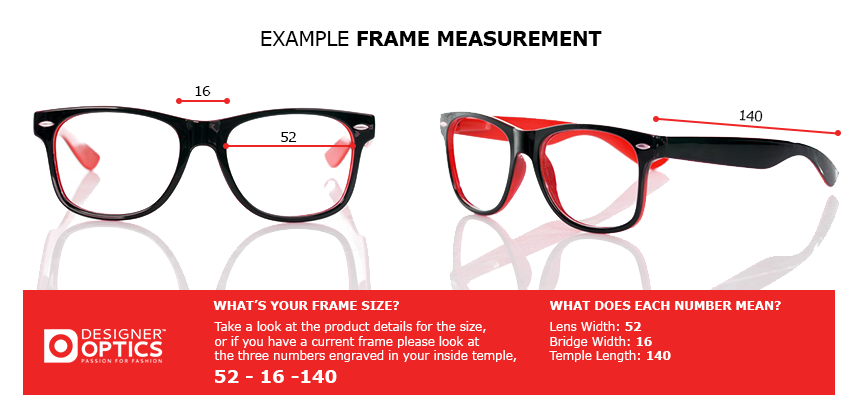
 Size Details
Frequently Asked Questions
What is the difference between the 4D Mag XL Low Bridge Fit and the standard 4D Mag XL?
Are the Smith 4D Mag XL goggles compatible with prescription glasses?
How does the MAG lens-change system work on the 4D Mag XL?
What is BirdsEye Vision technology and how much more can I see?
Do the 4D Mag XL goggles fog up easily?
What lenses are included with the Smith 4D Mag XL Low Bridge Fit goggles?
Compare With Similar Frames
How the Smith Optics Snow Goggles M00784 4D Mag XL Low Bridge Fit Goggles stacks up against the closest alternatives we carry.


- Identical BirdsEye Vision lens technology and 25% larger field of view
- Same ChromaPop optics and MAG magnetic lens-change system
- Same OTG compatibility—only 4D model that fits over glasses

- Lower price—typically $70-100 less than the 4D Mag XL
- Spherical lens design some riders prefer for traditional look and feel
- Same MAG lens-change system and ChromaPop technology

- Same BirdsEye Vision and ChromaPop technology as the XL
- Same MAG lens-change system and low bridge fit foam
- Better fit for medium-sized faces—less bulky than the XL
Read the full comparison
Smith 4D Mag XL Low Bridge Fit vs. Standard Fit vs. I/O Mag XL
Choosing between Smith's premium goggles comes down to fit, field of view, and budget. Here's how the 4D Mag XL Low Bridge Fit stacks up against its closest competitors in our catalog.
4D Mag XL Low Bridge Fit vs. 4D Mag XL Standard Fit
These goggles are identical except for one critical difference: foam padding at the nose bridge. The Low Bridge Fit adds a thicker foam layer designed for faces with lower nose bridges or higher cheekbones—common among Asian, Hispanic, and many other face shapes. If standard goggles leave a visible gap above your nose or let cold air in, the Low Bridge Fit solves it. The improved seal also enhances anti-fog performance by preventing moisture infiltration. Both versions offer the same BirdsEye Vision technology, ChromaPop lenses, MAG lens-change system, and OTG compatibility. Choose Low Bridge Fit if you've ever experienced fit issues with standard goggles; choose Standard Fit if traditional goggles seal well on your face.
4D Mag XL Low Bridge Fit vs. I/O Mag XL Low Bridge Fit
This is the big decision: pay $70-100 more for the 4D's expanded field of view, or save money with the I/O's proven spherical design? The 4D Mag XL delivers 25% more field of view thanks to its BirdsEye Vision lens that curves downward beneath your eye line—reviewers consistently call this a game-changer for spotting terrain features and accessing pockets without tilting your head. The I/O Mag XL uses a traditional spherical lens with excellent clarity but less dramatic peripheral expansion. Both share the MAG lens-change system, ChromaPop technology, low bridge fit foam, and OTG compatibility. The I/O's frame is slightly more flexible and may conform better to some face shapes, but the 4D's visual advantage is significant if you prioritize maximum awareness on technical terrain or in the backcountry.
4D Mag XL Low Bridge Fit vs. 4D Mag Low Bridge Fit (Medium/Large)
The XL is larger, heavier, and the only 4D model that accommodates prescription glasses. If you don't wear glasses under your goggles and have a medium-sized face, the standard 4D Mag Low Bridge Fit offers the same BirdsEye Vision technology and ChromaPop optics in a more compact package. The XL provides more coverage and slightly better peripheral vision, but it can feel bulky on smaller faces. The standard version is also available in more colorways. Choose the XL if you need OTG compatibility, have a larger face, or want maximum coverage; choose the standard 4D Mag Low Bridge Fit for a lighter, less obtrusive fit with the same core technology.
Our take: The 4D Mag XL Low Bridge Fit is the best choice for riders who need low bridge fit foam and either OTG compatibility or maximum field of view. The expanded vision is worth the premium over the I/O Mag XL if you ride technical terrain, backcountry, or simply want the widest possible view. If you don't need OTG and have a medium face, save some bulk and go with the standard 4D Mag Low Bridge Fit.
At a Glance
Smith 4D Mag XL Goggles (Standard Fit)
Pros:
- Identical BirdsEye Vision lens technology and 25% larger field of view
- Same ChromaPop optics and MAG magnetic lens-change system
- Same OTG compatibility—only 4D model that fits over glasses
- Slightly lower price point in some colorways
Cons:
- Standard foam may leave gaps on faces with lower nose bridges or higher cheekbones
- Less secure seal can allow cold air infiltration and reduce anti-fog effectiveness
- Not ideal if you've experienced fit issues with other standard Smith goggles
Smith I/O Mag XL Low Bridge Fit Goggles
Pros:
- Lower price—typically $70-100 less than the 4D Mag XL
- Spherical lens design some riders prefer for traditional look and feel
- Same MAG lens-change system and ChromaPop technology
- Also OTG compatible with low bridge fit foam
- Slightly more flexible frame that conforms well to different face shapes
Cons:
- 25% smaller field of view—lacks the 4D's BirdsEye Vision downward expansion
- No curved lens for enhanced peripheral and lower vision
- Some users report ventilation issues compared to the 4D Mag
- Less dramatic visual experience—the 4D's expanded view is the key differentiator
Smith 4D Mag Low Bridge Fit Goggles (Medium/Large)
Pros:
- Same BirdsEye Vision and ChromaPop technology as the XL
- Same MAG lens-change system and low bridge fit foam
- Better fit for medium-sized faces—less bulky than the XL
- Same price range with more colorway options available
- Excellent field of view for a medium/large goggle
Cons:
- Not OTG compatible—cannot accommodate prescription glasses
- Smaller frame provides less coverage and slightly reduced peripheral vision
- Medium/large fit may be too small for larger faces or helmet compatibility